

We get a lot of questions about what to do when PE progress slows down, especially when stretched length improves but erect measurements do not follow. This Q&A pulls together the most useful answers on pumping pressure, girth development, pelvic floor limitations, collagen remodeling, overwork, and long-term maintenance.
Why Is My Stretched Length Increasing but My Erect Length Is Not?
When bone-pressed stretched flaccid length keeps increasing but erect length stays the same, the issue may not be a lack of length stimulus.
You may have created more available space without developing enough blood-holding tissue to fill it during an erection. We sometimes describe this as the “sausage fill” problem: the outer structure has become longer or more flexible, but the internal erectile tissue has not caught up enough to fill the new space.
This is especially worth considering when there is a large gap between stretched and erect length.
The first thing we would examine is the routine itself. One example involved roughly 100 minutes of length work, three times per week, in addition to frequent girth training. Even when the tension looks reasonable on paper, that much total work may create a cycle of breakdown, partial recovery, and more breakdown.
Our practical recommendation would be:
- Take a genuine break from length work.
- Give the accumulated fatigue time to clear.
- Focus primarily on girth and blood-holding capacity for several months.
- Pay attention to erection quality, electrolytes, sleep, stress, and pelvic floor health.
If girth and erect length begin improving while direct length work is removed, that tells you the limiting factor was probably not your ability to create more stretched length.
Can Doing More PE Actually Cause a Plateau?
Yes. More work is not automatically more growth.
At a certain point, a routine stops acting like a productive stimulus and starts becoming a recovery burden. You may still see temporary stretch, expansion, or fatigue after a session, but the tissue never gets enough time to complete the remodeling process.
This is why someone can appear to be having “good” sessions while remaining stuck for months.
A useful sign is that adding even a small amount of extra work causes erection quality to fall. That usually means you are already near or beyond your recoverable workload.
For someone who has trained consistently for a year or longer, a month away from PE can sometimes be more productive than another month of forcing sessions. The break may allow unfinished recovery to catch up while reducing the strength adaptation that made the tissue increasingly resistant to the same workload.
You may come back needing less work to create a better response.
The main thing to understand is that a plateau is not always a request for more intensity. Sometimes it is your body asking you to finally let the previous work finish.
How Do You Choose the Right Pumping Pressure?
We generally teach a broad working range of approximately 5–10 inches of mercury for most people. More experienced users may sometimes work higher, but very few people have a legitimate reason to exceed 15 inches of mercury.
That does not mean everyone should choose one fixed pressure and use it forever.
Our current approach is to look for the pressure at which expansion begins to level off during that particular session. The appropriate pressure can change depending on:
- Tissue fatigue
- Sleep
- Life stress
- Previous training
- Recovery status
- Hydration and electrolyte balance
In other words, the target is not simply the highest pressure you can tolerate. It is the lowest pressure that produces the intended expansion without unnecessary edema, bruising, discoloration, or loss of erection quality.
Expansion remains a useful way to judge whether a girth session produced enough stimulus, but it can become misleading when much of the measurement increase is fluid retention.
A larger post-session measurement is not automatically a better session.
Why Do Some People Gain Girth Faster Than Length?
Girth is highly dependent on erection quality.
A relatively small improvement in erection pressure can create noticeably more outward expansion, particularly in someone who previously had weaker erections or an area limited by old injury or scarring. That means some early “girth gains” may partly reflect improved erection quality rather than completely new tissue.
That does not make the improvement meaningless. Better filling is still valuable. It simply means the rate may not continue forever.
Some people are also naturally better expanders. Their tissue responds strongly to internal pressure, while others may require a much longer period of consistent training to see the same change.
When gains are uneven between the base, midshaft, and area below the glans, we would avoid immediately redesigning the entire routine. Continue watching the trend, consider whether erection quality has improved, and isolate variables whenever possible.
If girth work is clearly producing progress, reach the desired girth range before making length the main variable again. Trying to aggressively push every dimension at once makes it much harder to identify what is actually working.
Is Collagen Growth Good or Bad for PE?
There are two very different processes that often get grouped together under the word “collagen.”
The first is healthy tissue remodeling. The penis is structurally dependent on collagen, so gaining tissue without producing collagen does not make sense. Controlled training should encourage gradual remodeling and hypertrophy while preserving normal function.
The second is fibrosis or scar-like collagen deposition caused by excessive inflammation, ischemia, repeated injury, or chronic overwork.
Those are not the same thing.
Fibrosis is closer to an emergency repair response. The body senses that an area is repeatedly being damaged and begins laying down less organized material to keep the structure from failing.
Healthy remodeling happens when the training dose is controlled well enough that the tissue can adapt rather than merely defend itself.
This is why the idea that all collagen production should be suppressed is misguided. You cannot destroy or thin the structural tissue indefinitely and expect normal erections, durability, and sexual function.
The goal is not “less collagen.” The goal is better-organized tissue produced at a recoverable rate.
What Does It Mean if the Penis Feels Hard, Tight, or Shrunken After Pumping?
That response most likely indicates overwork.
Pumping creates a high-pressure event throughout the erectile system. With excessive time, pressure, or frequency, the small muscles involved in erection and blood flow can become fatigued and tighten.
When they tighten, blood may have a harder time entering the penis normally. The result can be a temporarily smaller, firmer, or more contracted flaccid state after the session.
To troubleshoot it, review:
- Total pumping time
- Pressure
- Number of sessions per day
- Weekly frequency
- Body position
- Whether other length or girth work was performed first
- Whether erection quality has been declining
Do not interpret the contracted feeling as evidence that you need another session to “restore blood flow.” That can turn mild fatigue into a longer-lasting problem.
Reduce the workload and let the tissue normalize.
How Can You Tell if the Pelvic Floor Is Limiting Your Results?
A tight pelvic floor can affect more than erections. It may also influence flaccid hang, urination, comfort, blood flow, and the difference between stretched and erect measurements.
Possible signs include:
- A consistently tight or retracted flaccid state
- Difficulty relaxing after sitting for long periods
- Frequent feelings of needing to urinate
- Difficulty reaching or maintaining full erection quality
- Discomfort deeper in the perineum
- A very large stretched-to-erect length gap
- Noticeable improvement after pelvic floor release work
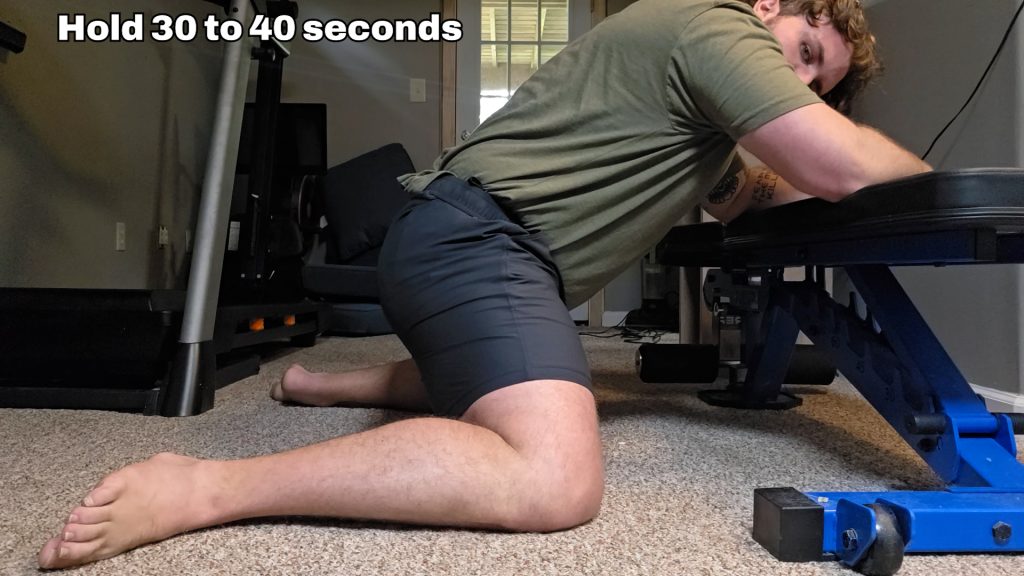
One simple observation is whether the flaccid state becomes looser soon after relaxing or massaging the pelvic floor. If it does, muscular tension may be contributing to the problem.
You may also notice easier urination, improved erection response, and better awareness of when the muscles are beginning to tighten again.
Pelvic floor release does not need to delay the start of all PE training, but it should be addressed alongside the routine. Continuing to add more mechanical work while ignoring a major blood-flow or muscular limitation is unlikely to be the best use of your recovery capacity.
Do You Need a Maintenance Routine After Reaching Your Goal?
In most cases, true tissue gains should not require a substantial lifelong maintenance routine.
What people often lose after stopping is not all the tissue they built. They lose temporary flexibility, fatigue-related expansion, inflammation, or the erection-quality boost that came from frequent training.
If you grow slightly beyond your target, you may settle back by a small percentage after stopping. That remaining measurement should represent the more permanent result.
Some people believe they need maintenance because their general health habits are not supporting their erection quality. Poor sleep, inadequate cardio, stress, weight gain, and declining metabolic health can reduce measurements even when the underlying tissue has not disappeared.
PE may temporarily mask those problems by increasing blood flow and expansion.
Our view is that you should not plan on maintaining your results with an hour of weekly training forever. Maintain the health factors that allow you to fully use the tissue you developed.
If a small amount of maintenance is genuinely useful, something as simple as 10–15 minutes of pumping a few times per week may be enough.
Biggest Takeaway
The recurring theme is that progress depends on identifying the actual limiter.
If stretched length is increasing but erect length is not, you may need more blood-holding tissue rather than more stretching. If pressure keeps rising but expansion does not improve, you may need recovery rather than intensity. If erection quality is inconsistent, the issue may involve stress, sleep, electrolytes, cardiovascular health, or pelvic floor tension.
The answer is rarely to attack every possible variable at once.
Use the smallest effective workload, isolate the dimension you are trying to improve, and give the tissue enough time to complete the adaptation you already asked it to make.