

We get a lot of questions about how quickly PE gains should happen, when a routine needs to progress, and how to tell whether the current workload is productive or simply creating more fatigue.
The biggest theme in these questions is that improvement does not come from blindly adding more weight, pressure, or training time. A productive routine should create measurable expansion or elongation while allowing erection quality and tissue condition to remain stable.
How Much Length Can You Realistically Gain Per Month?
Early progress may happen faster than long-term progress.
When someone begins a better-structured length routine, the first few months may produce relatively quick improvements because tight or underperforming tissue begins functioning more effectively. That initial change might be somewhere around an eighth to a quarter of an inch for some trainees, but it should not be treated as the expected monthly rate forever.
Long-term progress is more likely to resemble a percentage-based increase. We generally would not expect someone to consistently add much more than approximately 1% of their current length per month.
For an eight-inch measurement, 1% is roughly two millimeters. That does not sound dramatic on a monthly basis, but repeated over an entire year, it becomes a meaningful amount of progress.
The practical answer is to expect uneven gains. You may see an early burst, followed by much slower periods in which small changes accumulate over time.
Does Starting Size Determine How Quickly You Gain?
Starting size can affect the absolute measurement gained, but it does not necessarily change the percentage rate of growth.
For example, a 1% increase on ten inches is larger in absolute terms than a 1% increase on five inches. The larger starting measurement produces a larger numerical change, even though both people gained at the same percentage rate.
The more important variables are likely to be tissue sensitivity, tunica density, fibroblast activity, erection quality, recovery, and how effectively the routine creates a remodeling response.
Someone with poorer erection quality may also appear to gain faster initially because restoring normal expansion increases the erect measurement before significant new tissue has been built.
Starting size matters mathematically, but it is not the main factor determining whether someone responds well to training.
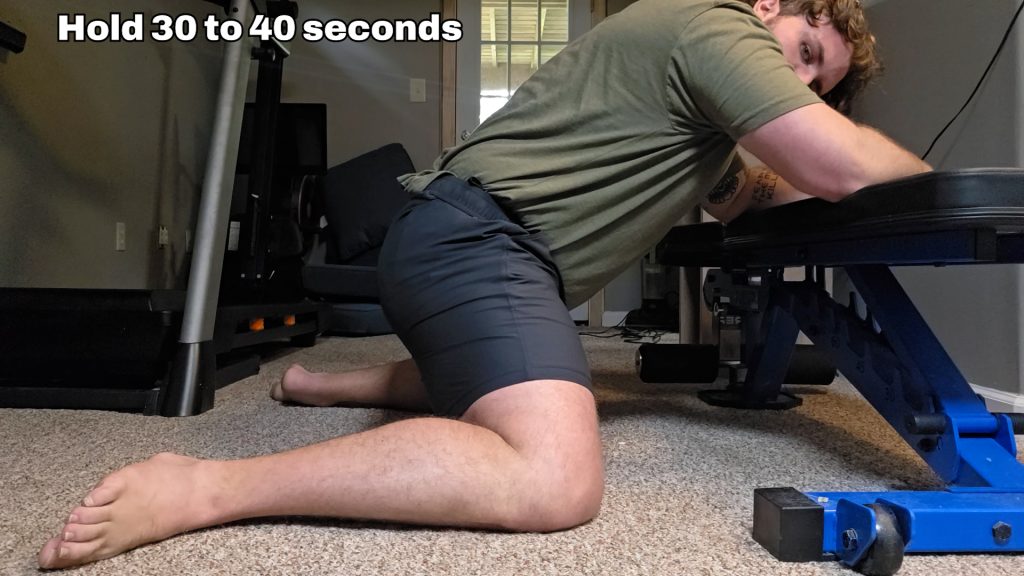
Can Your Pelvic Floor Be Tight Even if It Does Not Feel Tight?
Yes.
If a muscle has always been tight, you may not have a relaxed baseline for comparison. What feels normal may simply be the position your body has adapted to.
This is similar to someone who has always had an anterior pelvic tilt. They may not notice the associated hip tension until they begin correcting the position and experience what a more neutral posture feels like.
We are not saying that every erection-quality or measurement issue is caused by the pelvic floor. However, if there are potential symptoms—such as inconsistent erection quality, limited glans filling, retraction during stretching, hip dysfunction, or a large difference between stretched and erect measurements—it may be worth experimenting with gentle pelvic-floor relaxation.
The diaphragm, hips, glutes, adductors, and pelvic floor all influence one another. A long-term leg injury, altered breathing pattern, or significant hip tightness may make it harder for the pelvic floor to relax even when the pelvic floor itself does not feel obviously tense.
Why Does Pumping Produce More Edema Even When the Routine Has Not Changed?
The same pressure may become excessive as the session continues or as the tissue becomes more fatigued.
Time is one of the largest contributors to edema. Once total pumping time begins moving beyond approximately 20–30 minutes, additional cylinder size may increasingly come from fluid accumulation rather than useful tissue expansion.
Pressure also needs to be judged relative to the current condition of the tissue. As the tunica fatigues during a session, less pressure may be required to reach the same expansion.
If the tissue has temporarily become 10–15% easier to expand but you continue using the original pressure, you may now be applying more pressure than necessary.
This is why repeating the same gauge reading does not guarantee that every set creates the same stimulus.
The goal is not to force the highest possible cylinder measurement. Use enough pressure to reach controlled expansion, then reduce the workload if swelling begins replacing productive expansion.
Should You Stop Pumping Once You Reach Your Target Expansion?
Reaching the target expansion is the main goal, but there is still some uncertainty about whether holding that expansion for additional sets improves the remodeling signal.
If you normally perform ten sets but reach the target measurement after seven or eight, you may not technically need the final sets simply to become larger.
However, maintaining the achieved expansion for a few additional controlled intervals may provide a longer exposure to the target strain. We do not currently have definitive evidence showing exactly how much additional benefit this creates.
Our practical recommendation would be to complete the remaining sets if the tissue still looks and feels healthy, there is no meaningful edema, and erection quality is recovering normally.
Do not keep escalating pressure after reaching the target. The remaining work should maintain the expansion, not force increasingly swollen measurements.
What Should You Do if Erection Quality Improves During a Break?
Treat that improvement as evidence that the previous workload was probably too high.
One viewer reported that erection quality returned after taking three days away from a manual and pumping routine. That strongly suggests the issue was accumulated fatigue rather than a need for more stimulation.
When returning, we would reduce the total workload by approximately five to ten minutes and monitor the response.
Morning and nocturnal erections are especially useful recovery indicators because they occur without the same psychological pressure and daily stress that can affect intentional erections.
Your erection quality should remain relatively stable or gradually improve throughout a productive routine. If it repeatedly declines and rebounds only after time off, the routine needs to be adjusted.
Do not return from a recovery break and immediately repeat the exact workload that created the problem.
Why Do Some PE Routines Require More Rest Days Than Others?
Recovery needs to match the amount and type of work performed.
Someone can perform a small amount of low-intensity work frequently, just as someone may be able to do a few push-ups every day. A difficult routine involving high tension, pressure, or extensive fatigue requires more time to recover.
Penile connective tissue also does not follow exactly the same recovery timeline as muscle. Fibroblasts may remain active for several days after a stimulus, while the overall remodeling process may continue for several days to a week.
That does not mean everyone needs to take an entire week off after every session. It means that daily high-intensity training is not automatically more productive.
We generally prefer four to six training days per week with changes in pressure, tension, time, or intensity. Some sessions may act as lighter recovery work rather than repeating the hardest possible session every day.
A simple daily routine may still produce results, but a more carefully modulated schedule gives us better control over stimulus and recovery.
Do You Need a Maintenance Routine to Keep PE Gains?
We do not believe permanent tissue gains require an extensive maintenance routine.
What often changes after stopping PE is erection quality, not the amount of tissue that was created. Poor cardiovascular health, pelvic-floor dysfunction, stress, inactivity, or inconsistent nutrition can reduce expansion and make someone measure smaller even though the underlying tissue has not disappeared.
The main priorities for maintaining your best measurement are:
- Cardiovascular health.
- Pelvic-floor function.
- Exercise and general activity.
- Nutrition and hydration.
- Stress management.
- Consistently strong erection quality.
Someone who wants a small amount of maintenance work could use approximately ten minutes of controlled pumping three times per week. The pressure should only be high enough to reach maximum healthy expansion without exceeding it.
That may help keep the tissue responsive, but it should not be mistaken for a requirement to preserve every gain.
Final Takeaway
The strongest lesson from these questions is that PE progress should be managed through measurable response rather than endless progressive overload.
Early gains may happen quickly, but long-term growth is usually slow and uneven. Adding more weight, pressure, time, or frequency is not automatically the solution when progress slows.
Watch what happens to stretched measurements, in-device expansion, morning erections, sensitivity, swelling, and recovery. If erection quality improves only when you stop training, the workload is too high. If the same pumping pressure begins creating edema, the tissue may need less pressure rather than more.
Use the smallest workload that produces a meaningful response, adjust one variable at a time, and give the tissue enough time to complete the remodeling process.