

We get a lot of questions about how much PE work is actually necessary, what realistic progress looks like, and how to tell productive training apart from simple swelling or overwork. This Q&A pulls together the most useful answers on extender programming, pumping, erection quality, pelvic floor tension, recovery, and measuring results.
How Much Length and Girth Can You Realistically Gain in One or Two Years?
There is no single number that applies to everyone, but we generally frame first-year expectations as a range rather than a guarantee.
For length, our rough working estimate is around three-quarters of an inch in the first year for an average responder. Higher responders may gain more than an inch, while slower responders may finish closer to half an inch.
Girth usually progresses more slowly. A reasonable first-year range may be around a quarter to half an inch, although someone who begins with poor erection quality may initially see a larger apparent increase as tissue performance improves.
Progress also tends to slow after the first year. That does not mean growth stops, but the easy early adaptations are no longer doing as much of the work.
The important point is that these are broad observations, not promises. Starting anatomy, erection quality, training consistency, recovery, measurement accuracy, and individual tissue response all affect the outcome.
Can Doing Too Much PE Prevent You From Gaining?
Yes. More work is not automatically more productive work.
One beginner described combining manual work, high-tension vacuum extending, and additional hours in an all-day stretcher. Our concern was that the total workload may have moved beyond productive stimulus and into repeated tissue breakdown.
An all-day stretcher can sometimes help hold tissue in a longer position, but it should not automatically be stacked on top of an already demanding routine. If the tension is high enough to keep producing fatigue, those extra hours are not passive shape retention—they are more training.
We usually recommend establishing whether the main hypertrophy-style routine works first. Start with the primary length stimulus, track the response, and add lower-tension retention work only when there is a clear reason.
A routine should be built in layers. Throwing every available method into the first version makes it difficult to know what is helping, what is unnecessary, and what is causing overwork.
Why Can Erection Quality Be Better Lying Down Than Standing?
When erection quality changes dramatically with body position, we would not look only at blood-flow medications.
Cardiovascular conditioning still matters. If someone becomes breathless very easily, the heart may simply be poorly conditioned, which can limit the pressure available for a strong erection.
However, the positional change may also point toward posture, hip mechanics, pelvic floor tension, or nerve irritation.
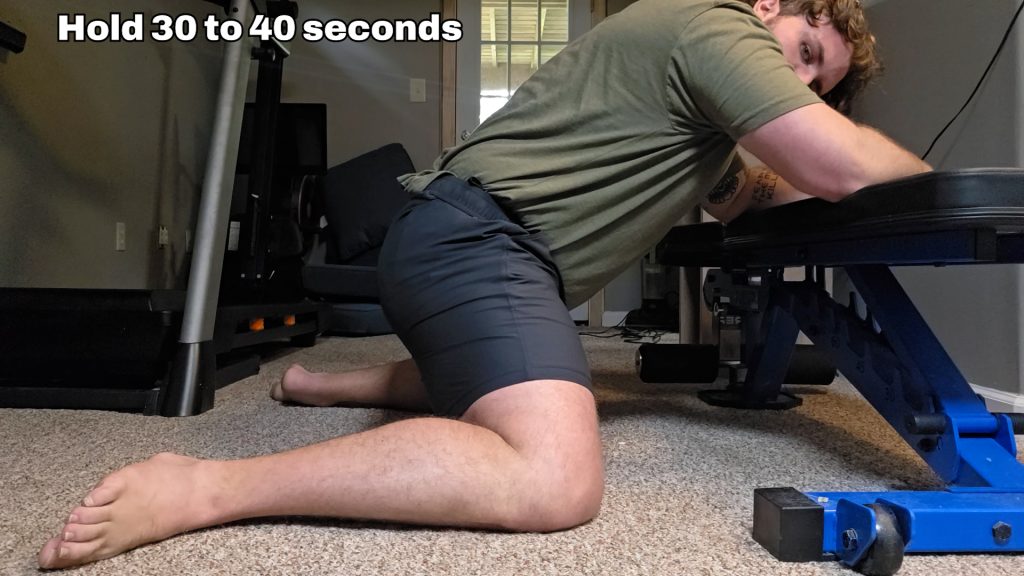
Lying down can place the pelvis in a different position and reduce the amount of tension passing through the pelvic floor. When standing, tight hip flexors, adductors, abductors, extensors, or an exaggerated pelvic tilt may increase tension around the muscles involved in maintaining erection pressure.
Lumbar and pelvic positioning may also affect the nerves supplying the genitals. That does not mean every positional erection problem is caused by a compressed nerve, but posture and sensation should not be ignored.
Our practical starting point would be:
Improve cardiovascular fitness, work on hip mobility, practice pelvic floor relaxation, and pay attention to whether standing posture causes involuntary tightening.
Medication may improve blood flow, but it does not automatically correct the mechanical reason erection quality changes with position.
How Much Edema After Pumping Is Too Much?
A small amount of temporary swelling can occur with pumping, but the goal is expansion—not turning the session into a competition to collect as much fluid as possible.
One practical sign is vascular visibility. If you can still clearly see normal vascular definition while erect, the swelling is more likely to be within a manageable range.
When fluid pools into an unusual shape while flaccid, creates a pronounced ring, or makes the penis look more bloated than engorged, that is more likely excessive edema.
We generally do not want expansion to become dramatically higher than the intended training target. Once the session moves well beyond roughly 10% expansion, a growing percentage of the size increase may be fluid rather than useful erectile tissue expansion.
Some people naturally swell more easily and may still make progress. The concern is whether the routine is training better erection expansion or simply improving the tissue’s ability to hold lymphatic fluid.
More swelling is not proof of a better workout.
Is Interval Extending Better Than Continuous Tension?
Interval and continuous extending do not create exactly the same type of stimulus, so there is no clean formula that converts one into the other.
With interval extending, the tissue is repeatedly loaded, partially unloaded, and loaded again. Those repeated loading points may create fatigue faster than simply holding one continuous position.
Continuous tension relies more heavily on viscoelastic creep—the tissue gradually lengthening while held under load. That can work, but it may require more time to create a similar level of fatigue.
In our experience, a 40-minute interval session may sometimes create a response that would require roughly 60–70 minutes of continuous work. That is only a practical observation, not a universal conversion chart.
A hybrid approach may be the most convenient option:
Begin with approximately 10 focused intervals, such as one minute under tension followed by a brief reduction in load. After that, switch to longer continuous sets that allow you to multitask.
The breaks are also useful for protecting the glans and checking circulation, sensation, and attachment pressure.
For the tension itself, our rough framework is:
- Below 2 pounds: low-tension retention work
- Around 4–6 pounds: moderate working tension
- Above 8 pounds: high tension
- Around 15 pounds or more: an unnecessary danger zone for most users
The attachment method, tissue response, session length, and experience level still matter more than the number alone.
How Long Should a High-Tension Extender Session Last?
High-tension extenders should not be programmed like traditional low-tension devices.
Older low-tension systems were often designed to be worn for four to eight hours. A high-tension extender behaves more like a hanging session with springs or controlled loading.
For a full intermediate high-tension routine, we generally look at around 40–60 minutes of total length work. Beginners should usually start closer to 20–30 minutes while they learn how their skin, glans, circulation, and connective tissue respond.
Wearing a high-tension system for several hours does not automatically improve results. It may simply add more attachment stress, numbness, skin irritation, or excessive fatigue.
The question should not be, “How long can I tolerate this?”
It should be, “What is the smallest productive dose that creates a measurable response and still allows me to recover?”
What Is the Difference Between a Deload and a Deconditioning Break?
A deload and a deconditioning break have different goals.
A deload is primarily for recovery. You reduce or stop training long enough for irritation, fatigue, erection-quality changes, and other signs of accumulated stress to settle. For many people, approximately one week is enough.
A deconditioning break is longer because the goal is not merely to recover. The idea is to allow some of the tissue’s adaptation to repeated loading to fade so that it may become responsive to training again.
Our rough working range for deconditioning is four to six weeks. That estimate is based on the time required for connective-tissue remodeling and changes in adaptation, although penile tissue may not follow a perfectly predictable schedule.
The practical distinction is simple:
- Deload: “I need to recover from the work.”
- Deconditioning: “I have recovered, but the tissue may be too adapted to the current stimulus.”
Do not take a month off every time you have a difficult week. Use the longer break when there is a genuine plateau despite adequate recovery and sensible programming.
How Often Should You Measure to Know Whether Your Routine Is Working?
There are two different things to measure: the immediate training response and long-term growth.
When starting a new length routine, measuring stretched flaccid length before and after the session can help determine whether the workout created a temporary tissue response. We generally look for at least a small increase—roughly 2%—rather than expecting a dramatic change.
For pumping, post-session erect circumference can be used to evaluate expansion. A moderate temporary increase may show that the session created the intended pressure and tissue filling.
Those numbers tell you whether the session did something. They do not prove permanent growth.
For actual erect length and girth, measuring constantly creates more confusion than useful information. Erection quality, ruler angle, body position, hydration, temperature, and parallax error can all change the result.
We would usually wait four to six weeks between formal erect measurements. Even then, the clearest evidence of real progress often appears over three to six months rather than from one isolated measurement.
Use the same method, ruler, body position, erection quality, and measurement point every time. A measurement system is only useful when the system stays consistent.
Biggest Takeaway
The main lesson is that PE programming should be based on measurable response, not on how much equipment or training time you can stack into one day.
Enough tension to create a stimulus is useful. More tension after that may only create attachment stress. Enough pumping to create controlled expansion is useful. More pumping after that may mostly create edema.
Build a simple routine, measure the immediate response, monitor erection quality and recovery, and only increase the workload when progress has genuinely stalled.
The boring answer is usually the correct one: consistent productive training beats repeatedly trying to destroy the tissue.