

Original VOD: PE Office Hours — Pelvic Floor Health, Pumping Protocols, Fibrosis, Finasteride & More – YouTube
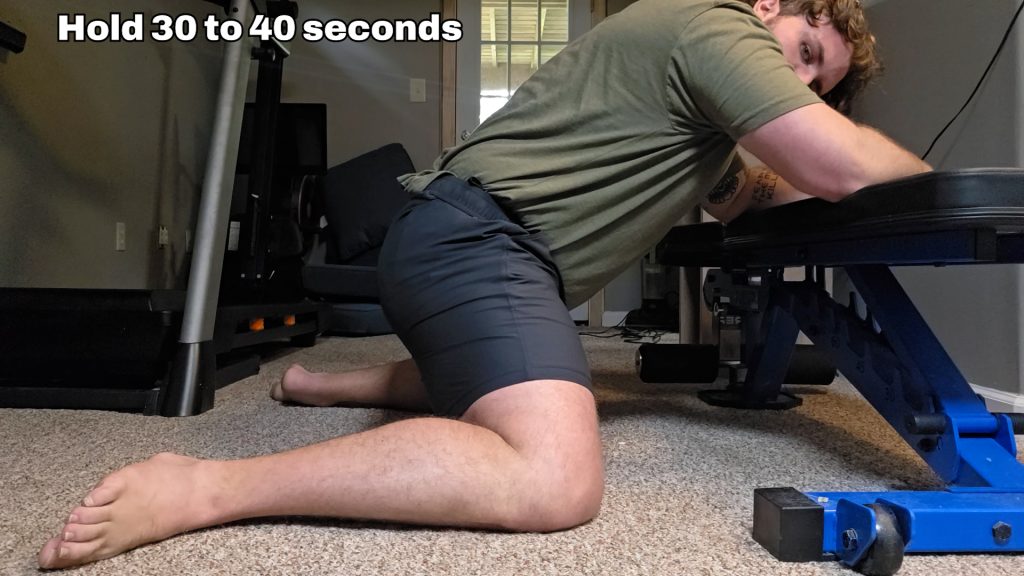
1. Where should you massage the pelvic floor?
A viewer expressed their concern that the perineum feels hard while flaccid. Although the pelvic floor naturally sits in a slightly contracted position, it shouldn’t feel uncomfortably tight or rigid at rest. If it does, that’s a clue the muscles may be excessively tense.
If you look at an anatomy model, the pelvic floor is much larger than most people realize. Rather than focusing only on the small area between the scrotum and anus,you may notice that the muscles wrap all the way out toward the sit bones (ischial tuberosities). Because of that, effective massage needs to reach much deeper than simply pressing on the surface of the perineum. In many cases, you’ll actually feel the pressure through the scrotum because you’re targeting the deeper layers of the pelvic floor muscles.
This information is important for erection quality. The pelvic floor surrounds the internal portion of the penis, including muscles such as the bulbospongiosum and ischiocavernosus, which help support erections by improving blood trapping and rigidity. When these muscles are chronically tight, they can restrict normal blood flow and limit erectile function. By relaxing them through massage, blood can travel into the penis more freely while flaccid, and the muscles are able to contract more effectively during an erection. Many people should notice an almost immediate improvement in flaccid hang and erection quality after a successful release.
This is only the starting point. We are still developing a complete pelvic floor protocol-including guidance on massage duration, frequency, and progressions-but we believe that simple perineal massage is one of the easiest ways to determine whether pelvic floor tension is contributing to poor flaccid hang or reduced erection quality.
2. Can you do penis enlargement with a hypertonic pelvic floor?
Yes. Plenty of people have unknowingly trained with a tight pelvic floor for years. We want to start conservatively with about 10–15 minutes of pumping per day, avoid kegeling during sessions, and stay away from clamping until your pelvic floor is healthier. Pumping is generally much safer because it doesn’t create the same pressure buildup.
3. Is there a best time to pump after eating?
Don’t overthink meal timing. BD says he often trained right after eating large meals and still made gains. Training completely fasted may actually be worse because blood volume is lower and stress hormones are higher. As long as you’re not so full that you’re uncomfortable, eating beforehand shouldn’t hurt your results.
4. Why is the pelvic floor so difficult to fix?
The pelvic floor doesn’t exist in isolation. Tight hips, poor posture, weak core muscles, breathing mechanics-even the way you sit all day-can contribute. That’s why there’s no universal “top three exercises.” The right solution depends on what caused your tension in the first place.
5. Is an extremely detailed PE routine actually worth it?
Not always. Once you’ve done most of the important work, piling on extra volume gives diminishing returns. Someone doing half the work may get almost the same results. We’d rather see people train efficiently than spend hours chasing tiny improvements.
6. What is fibrosis, and can you prevent it?
Fibrosis is what happens when collagen stops healing in its normal, organized pattern. Healthy collagen is arranged in neat, rope-like bundles (fibrils), giving tissue both strength and flexibility. When tissue is repeatedly broken down faster than it can properly recover, the body shifts into a protective repair mode, laying down collagen in a more irregular pattern along with scar-like tissue. The result is fibrosis-essentially soft tissue scarification rather than healthy remodeling.
In practical terms, fibrosis often feels like a rough patch, hard band, or area of uneven texture beneath the skin. Some bends or irregularities can also be related to fibrosis. We see the biggest cause in PE is chronic overtraining-consistently pushing the tissue beyond its ability to recover instead of allowing proper remodeling between sessions.
BD uses his own experience as an example, saying he developed a small patch of fibrosis after aggressively using a Bathmate and then masturbating aggressively afterward. The repeated stress in the same area created a localized patch where his fingers contacted the shaft.
The encouraging part, BD says, is that fibrosis isn’t necessarily permanent. Unlike many people assume, it can often be improved with soft tissue physiotherapy. Regular massage and targeted soft tissue work can help break down those fibrotic areas over time and restore healthier tissue quality.The biggest takeaway is simple: don’t chronically overwork the tissue. Preventing fibrosis is far easier than treating it, but even if it develops, it’s often repairable with patience and appropriate soft tissue work.
7. Is finasteride or overtraining causing my erection problems?
Let’s look at the timeline. In this case, the viewer had already stopped PE for roughly two months and had continued working on pelvic floor stretching and breathing exercises, yet his erection quality hadn’t improved. Based on that history, we can say the overtraining should have been largely resolved by then. If you’ve already removed the training stress and addressed your pelvic floor but your erections still haven’t recovered, we believe finasteride becomes the more likely explanation.
He also spends time clearing up a common misconception: libido and erection quality are not the same thing. According to BD, libido is driven largely by dopamine and your brain’s reward system—it makes you seek out sex and masturbation because of the dopamine response. Hormones like testosterone can amplify that drive, but they’re part of a separate system from the physical ability to achieve and maintain an erection. That’s why someone can still have a strong sex drive while experiencing poor erection quality. As BD puts it, if libido and erections were the same thing, “any horny guy wouldn’t need Viagra.”
BD then shares his own experience with finasteride. He says he eventually replaced it with a topical hair-loss peptide (RU58841) after seeing good results, partly because he wasn’t happy with finasteride’s side effects. In his opinion, finasteride is an overly aggressive medication because it broadly suppresses DHT. He suggests that some people may benefit from trying a lower dose to see if erection quality improves, although he doesn’t present that as a universal solution.
Finally, BD notes that his own recovery after stopping finasteride wasn’t immediate. He says he lost his libido while taking it, his erection quality remained poor for about two months after discontinuing it, and he didn’t feel fully recovered until roughly four months later. His broader takeaway is that if you’ve already taken sufficient time off from PE and addressed the most likely training-related causes, persistent erection problems may point toward finasteride rather than continued overtraining.
8. How much girth can pumping realistically add?
BD’s Answer:
For most people, a realistic expectation is about ¼ to ½ inch of girth per year. Exceptional responders might gain around an inch over several years, while slower responders may take four to six years to reach that point. The biggest mistake is expecting early beginner gains to continue forever.