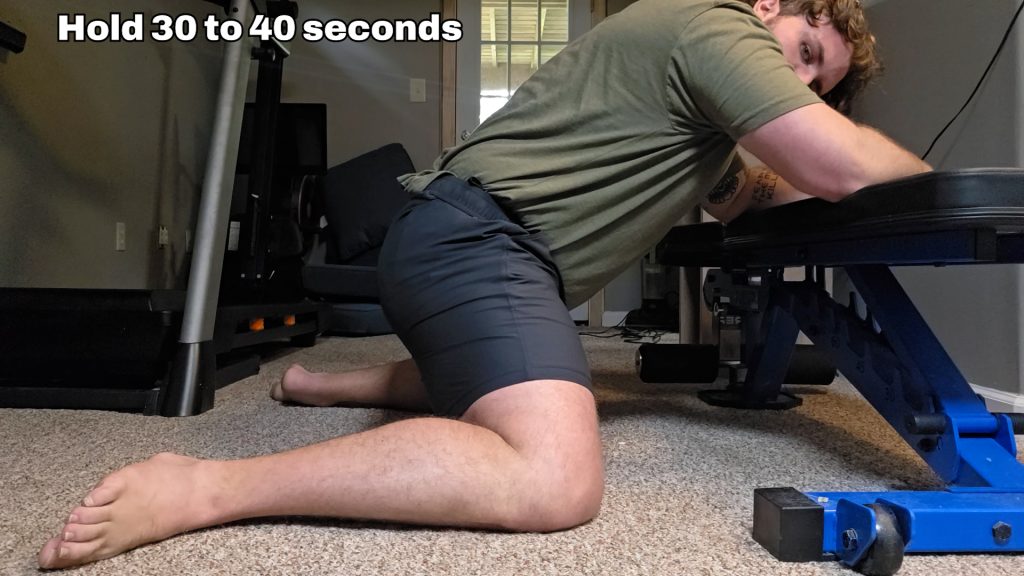



A generalized progression model for manual stretching, extenders, and hanging
As many of you already know from our interval hanging approach, this is the more generalized version of the same concept. The framework can be applied to different forms of elongation work, including manual stretching, extenders, and hanging. More specific routines can be built from the same underlying structure.
From the research:
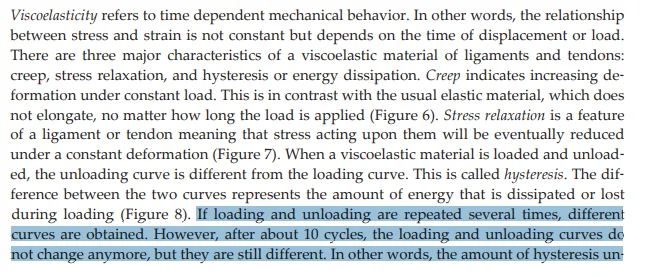
| Core idea: Use a short pre-fatigue phase to bring the tissue to its current relaxed elongation, then use longer strain sets to work beyond that baseline. |
The Two Phases
1. Pre-Fatigue Phase
The pre-fatigue phase uses 10-15 short sets. Its purpose is to prime the tissue so you can enter the strain phase more quickly and perform more productive work at the same load.
The research framework we use suggests that roughly 10-14 sets of static stretching can bring collagen-rich tissue close to its maximum elongation at its current state. After that point, additional work is less about reaching the same length and more about accumulating fatigue so the tissue can continue to elongate under the same weight.
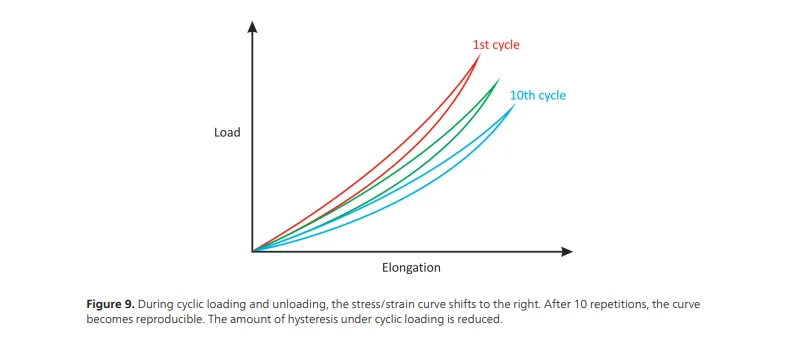
Metric target: If you track measurements, aim to be approximately 1-2% longer immediately after the pre-fatigue phase than before it.
2. Strain Phase
The strain phase uses longer sets to elongate the tissue beyond its typical length. This is the phase intended to create the stimulus for longer-term size change. For complete beginners, the pre-fatigue phase alone may still be enough to produce progress, but likely for a different reason.
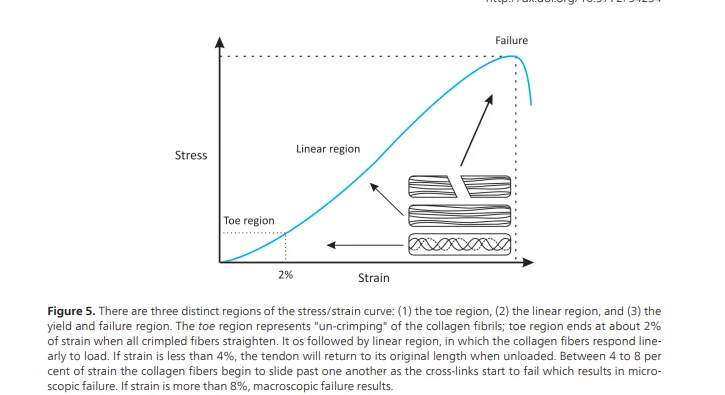
Temporary post-session change: A 1-6% temporary increase in length may occur during this phase. We have recently averaged around 3%, while a small number of clients have reached approximately 6%. These figures are session metrics, not guaranteed permanent gains.
This same general principle also applies to ligament-focused elongation work.
Beginner Routine: Manual Stretching
You can perform this version with your hands. It is simple and accessible, although a device may become more practical as session length and workload increase.
| Phase | Prescription |
| Pre-Fatigue | 10 sets × 45-second static stretches |
| Strain | 4 sets × 2.5 minutes of static stretching |
| Angle | Use the same angle throughout the session |
| Progression | Every 2 weeks, add one additional 2.5-minute strain set |
| Duration | Continue for up to 16 weeks |
Do not add work to the pre-fatigue phase. Progress only by adding strain-phase time. You may move to a device at any point and continue using the same principle.
Intermediate Routine: Device-Based Training
This version assumes you are using an extender or hanger. A straight-out angle is generally the preferred setup. The method can work with both devices, although longer strain sets are usually easier to manage with a hanger.
| Phase | Prescription |
| Pre-Fatigue | 10 sets × 60 seconds under load |
| Strain | 4 sets × 5 minutes under load |
| Angle | Straight out |
| Progression | Every 2 weeks, add one additional 5-minute strain set |
| Load | Approximately 5–7 lb (2–3 kg) for the full block |
| Duration | Continue for up to 16 weeks |
Again, do not add anything to the pre-fatigue phase. Keep the load stable and progress by adding strain-phase sets. Weight progression is reserved for the advanced stage.
Advanced Routine: Strain-Rate Progression
| Phase | Prescription |
| Pre-Fatigue | 14 sets × 60 seconds under load |
| Strain | 10 sets × 5 minutes under load |
| Progression Method | Increase load very slowly based on measured strain rate |
Strain rate formula
(Post-session stretched length ÷ Pre-session stretched length) – 1
- If post-session stretched length is less than 2% above pre-session stretched length, add 1 lb (approximately 0.5 kg).
- Test again during the next session.
- If strain rate is still below 2%, add another 1 lb.
- Continue only until the post-session strain rate rises above 2% again.
Example: If you are hanging 10 lb and your post-session measurement is less than 2% above baseline, move to 11 lb for the next session and reassess.
| When to stop progressing: If you add a total of 5 lb within one week and still see no meaningful change in strain rate, do not keep forcing load upward. Deload, take a break, or temporarily switch to a clamping-focused routine. |
Progression Summary
- Pre-fatigue volume stays fixed within each training level.
- Beginners and intermediates progress by adding strain-phase time.
- Advanced trainees progress by adding load only when strain rate falls below 2%.
- Temporary post-session elongation is used as a feedback metric, not as proof of permanent growth.
- If the expected response disappears despite repeated load increases, reduce stress rather than continuing to escalate.
Biggest Takeaway
The main thing to understand is that the pre-fatigue phase and strain phase have different jobs. The short sets prepare the tissue and improve the amount of work you can perform at a given load. The longer sets provide the actual strain exposure. Progression should come from the strain phase, not from endlessly adding work to everything at once.
https://www.intechopen.com/chapters/44614