

We get a lot of questions about PE routines, especially around pumping pressure, pelvic floor health, length-focused training, erection quality, and whether more work actually means more growth. This Q&A pulls together the most useful answers in one place.
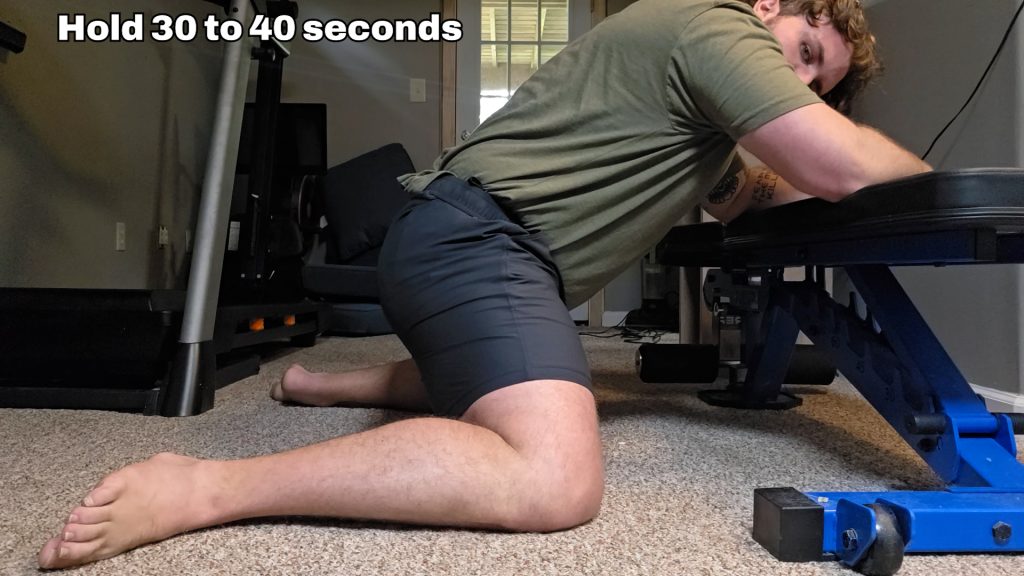
Can you massage the pelvic floor with your hands, or is a tennis ball better?
You can use your hands, but in our experience, a tennis ball or massage ball usually works better.
The reason is simple: when you use your hands, you are limited by thumb strength and how much pressure you can comfortably apply. With a ball, you can use bodyweight and get deeper pressure without actively squeezing or straining.
The goal is not to crush the area. The goal is light-to-moderate pressure that helps the tissue relax. We would frame it the same way as using a massage ball on your traps or glutes: the object lets you apply pressure more consistently than your hands can.
For pelvic floor release, sitting carefully on a tennis ball, massage ball, or even using a foam roller-style setup can help some guys notice better flaccid hang or better relaxation. If you notice an immediate improvement in flaccid hang after release work, that is usually a sign your pelvic floor may be contributing to your issues.
Do you need to stay fully erect the whole time while pumping?
The practical answer is no.
We usually recommend going into the pump engorged or erect, but you do not necessarily need to maintain a full erection for the entire session.
For years, we tried to stay erect the whole time while pumping. Later, we switched to getting erect, entering the cylinder, and then letting whatever happens in the cylinder happen. We did not notice a meaningful difference in results between those two approaches.
What matters more is how you enter the pump and how your pelvic floor behaves during the set.
If you go in completely soft, you may not get the same quality of expansion. But once you are in the cylinder, staying perfectly erect the entire time is not the main variable. The bigger issue is whether the pelvic floor stays relaxed enough to allow good expansion without just building edema.
This is also why interval pumping can be useful. Shorter sets give you a better chance to manage pressure, expansion, and recovery instead of just sitting in the cylinder and hoping the session goes well.
Do stretch angles matter if your main goal is length?
They matter less than people think.
The main thing to understand is that the shaft does not care as much about angle as the surrounding fascia and ligaments do. When you pull at different angles, you may bias different connective tissue structures near the base, but the actual length stimulus mostly comes from applying enough tension to the shaft in a controlled way.
Our view is:
Straight out is probably the most scientifically sound angle because it transfers tension directly through the shaft.
Straight down may show more exposed length for some guys if they have tight fascia or ligament restriction.
Left and right are more useful for correction work or addressing asymmetry than for general length gains.
Straight up is the one we are most cautious about because it can put more pressure on the pelvic floor.
So if you are only looking for length, do not overcomplicate this. You do not need five exotic angles and a 40-minute stretch ritual. A clean, repeatable length stimulus matters more than constantly changing angles.
Is 10 inches of mercury too much pressure for full expansion?
Not necessarily.
First, most hand pump gauges are not perfectly calibrated. If your gauge says 10 inches of mercury, it may really be closer to 8 or 12. That does not mean the number is useless, but we would not treat it like lab-grade precision.
In general, 10 inches of mercury is not automatically alarming. If someone said they needed 15 inches of mercury or more to expand, that would raise more concern.
The better question is whether the pressure needed for full expansion changes over time.
For some guys, the pressure required to reach full expansion slowly drops across sessions. That can be a sign the tissue is becoming more fatigueable and easier to expand. But if your number does not go down, it does not automatically mean you are failing. You may already be at your floor pressure.
We think about “floor fatigue” as the lowest pressure you need to reach full engorgement once the tissues are already fatigued. If you take time off and that number jumps back up, that may tell you your previous lower number was fatigue-related.
Hydration, sodium balance, blood volume, pelvic floor tone, and overall erection quality can all change what pressure you need on a given day. So do not obsess over one reading. Track the trend.
What should you do about a lymphocele from clamping or PE work?
A lymphocele is basically a blockage or backup in the lymphatic channels. The simple way to picture it is a small clog in a pipe. Fluid builds behind the clog, and the area can bow out or swell.
Our general view is that these are usually reversible, but they should not be ignored.
The first step is usually to stop the thing that keeps aggravating it. If clamping, squeezing, or aggressive girth work made it worse, continuing to do that is not a great idea.
Light massage may help move the fluid. We are talking about gentle pressure around the area, not trying to crush the lump or force it down.
If it is superficial, this may be something worth asking a doctor about. In some cases, a medical professional can drain fluid or evaluate whether it is something else. The main concern is letting a simple fluid issue become more stubborn over time.
The practical answer: stop irritating it, use gentle lymphatic-style massage, and consider getting it looked at if it persists or keeps growing.
If you have done months of hanging with no length gains, are you undertraining or overtraining?
A lot of guys assume no gains means they need more work. Sometimes the opposite is true.
In the question we answered, the routine included long hanging sessions, red light, pumping for blood flow, and multiple long sets with weight. The issue was not lack of effort. The issue was likely too much total work.
Our blunt answer was: if you are doing hours of hanging and not seeing length growth, you may be training the tissue for strength and endurance instead of actually creating the kind of fatigue that leads to remodeling.
This is a common mistake. More time under load does not always mean better growth. At a certain point, the body adapts to tolerate the work. You get better at surviving the routine instead of growing from it.
If we saw someone doing that much work with no length progress, we would usually recommend backing way off. That may mean taking a longer break, then restarting with a much simpler routine.
For example, instead of two hours of hanging, we would rather see someone come back with something closer to a controlled 40-minute length session at a manageable weight, then build slowly from there.
The key phrase is slowly. Not “take two days off and go right back to war.”
Should you train length and girth at the same time, or focus on one first?
You can train both, but we do not think it is usually optimal.
Our preference is to focus on length first for a dedicated block, then switch to girth later. A realistic length phase might be six months to a year, depending on the person, the routine, and the goal.
The reason is not that combining length and girth is impossible. It is that splitting the stimulus can make the routine less efficient and more mentally complicated.
If you pull tissue lengthwise, the recovery and remodeling signal is biased in that direction. If you then train girth hard on the opposite days, you are asking the tissue to adapt in multiple directions at once.
The way we think about it is: you have limited “workers” available for repair. If you tell them to build in every direction at the same time, the process may be less focused.
There is also the boring reality of adherence. PE is repetitive. If the routine becomes too complex, people are more likely to overthink it, skip it, or constantly change things before they know what is working.
So yes, you can train length Monday, Wednesday, Friday and girth Tuesday, Thursday, Saturday. But we would usually rather see someone pick the priority, make measurable progress, and then move to the next goal.
What matters most for erection quality: pelvic floor, water, sodium, cardio, or pumping?
Our ranking starts with pelvic floor health.
The pelvic floor is basically the faucet. If the faucet is tight, restricted, or not coordinating well, everything downstream gets harder. You can have enough blood volume and still struggle if the system is not letting blood move properly.
After that, we would look at water and sodium balance. You need enough fluid in the system. If you are underhydrated or depleted, you are asking the body to create a strong erection with less available volume.
Sodium matters because it helps regulate fluid balance. Some guys notice better fullness when sodium is not too low, especially if they are active, sweating, dieting, or eating very “clean.”
Then comes cardio. Cardio makes the pump stronger and more efficient. Better cardiovascular health generally supports better erection quality because blood flow is the whole game.
Pumping can help too, but we would not put it first for EQ. Pumping can help tissue expansion and may improve vascularity over time, but if the pelvic floor, hydration, sodium, and cardiovascular side are a mess, pumping alone is not going to fix everything.
Our rough order would be:
Pelvic floor health first.
Adequate water and sodium balance second.
Cardio third.
Pumping after that.
The main thing is not to treat erection quality like a one-variable problem. It is usually a system problem.
Biggest Takeaway
The biggest theme is that more intensity is not always better.
Whether we are talking about pumping pressure, hanging volume, clamping, stretch angles, or erection quality, the answer usually comes back to control. You want enough stimulus to create adaptation, but not so much that you train endurance, irritate nerves, build edema, strain the pelvic floor, or turn every session into a recovery problem.
The smarter approach is to make the routine repeatable, track how your tissue responds, and adjust based on erection quality, expansion, pelvic floor feedback, and actual measurements.
If your EQ drops, your pelvic floor aches, your pressure needs spike, or your routine keeps getting longer with no gains, that is not a sign to blindly push harder. That is usually a sign to step back and rethink the stimulus.