


Penis extenders are one of the few penis-enlargement devices discussed in medical literature, but they are also widely misunderstood. Different extenders apply different amounts of force for different lengths of time. Those differences affect what each device is best suited for and the risks involved.
This guide explains the basic biology, the difference between low and high-tension devices, common marketing myths, attachment safety, and the structure of simplified routines.
In this guide: extender types, tissue-remodeling theory, attachment safety, routine structure, progression, recovery, and warning signs.
What Is a Penis Extender?
A penis extender is a traction device that holds the penis in an elongated position. Traditional designs use adjustable rods, a base ring, and a strap, cradle, or vacuum attachment near the glans. Springs or adjustable rods maintain the stretching force.
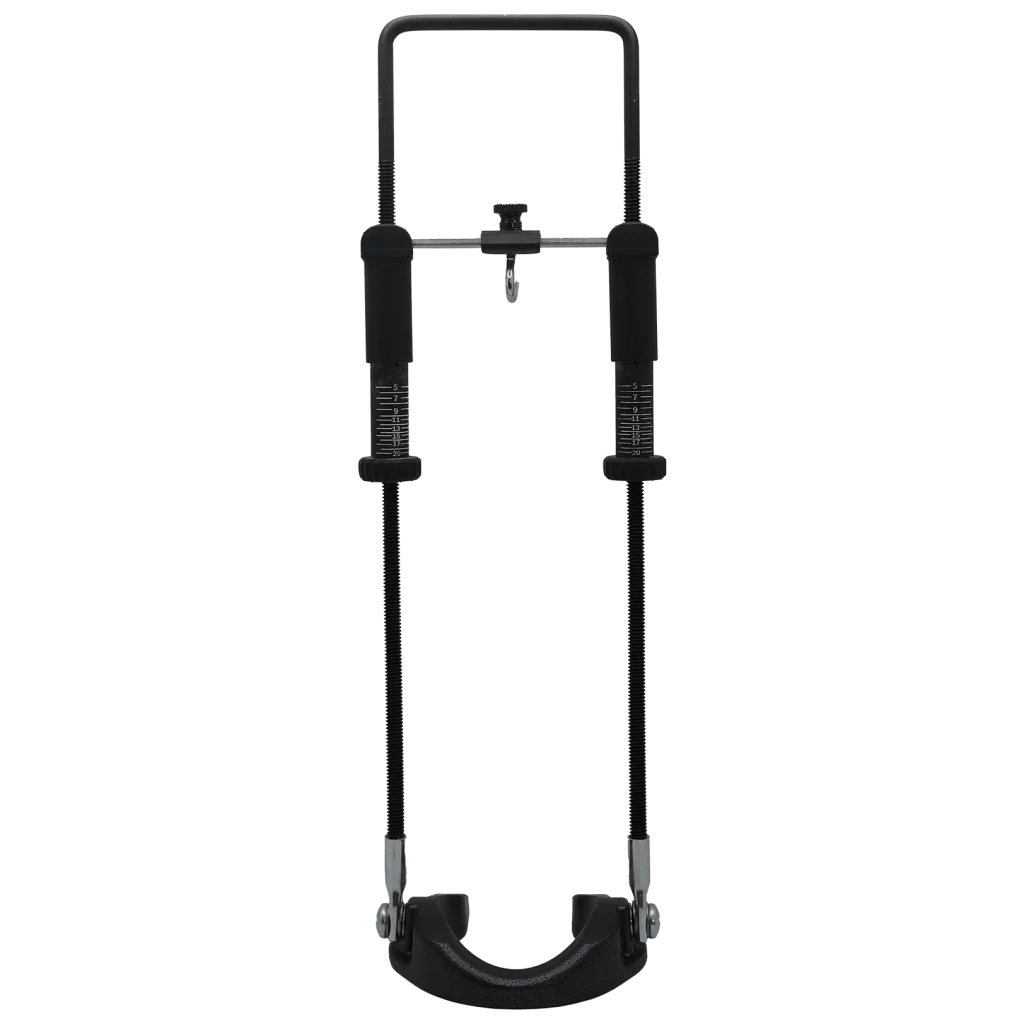
Many medical traction devices were developed for treating Peyronie’s disease, in which fibrous plaque can contribute to penile curvature, shortening, or deformity. Their design also draws on soft-tissue expansion used in reconstructive medicine, where skin is gradually stretched before surgery.
These origins help explain both the value and the limitations of extender training. Skin responds well to chronic low tension, but the structural tissues involved in penile length are more complex. A protocol studied for a medical condition should not automatically be assumed to produce the same results when used for cosmetic enlargement.
How Extenders Affect Tissue
The biggest marketing myth: mitosis
Some advertisements claim that constant stretching simply causes penile cells to divide through mitosis, creating continuous growth. That explanation is overly simplistic.
Much of the mechanical load is carried by structural proteins and the extracellular matrix. Collagen is a major part of that framework. Cells participate in repair and remodeling, but these are gradual biological processes and not unchecked cell multiplication.
Collagen remodeling
Think of collagen as part of the framework that gives tissue its strength and organization. The source proposes that higher mechanical tension creates collagen fatigue and releases repair signals stored within the extracellular matrix. Those signals may activate cells involved in producing and reorganizing collagen.
The source calls the lower-force process shape training: holding tissue in a longer, straighter position so it repeatedly returns to that alignment. Early measurement changes may partly reflect tissue being pulled flatter rather than permanent new tissue. An immediate ruler change and lasting biological growth are not the same thing.
| Note: Low tension is presented mainly as a positioning and retention stimulus. High tension is presented as a stronger fatigue stimulus. These are working explanations but not guarantees of growth or settled clinical conclusions. |
Low-Tension, High-Tension, and All-Day Stretchers
Low-tension Extenders
Traditional rod-and-spring extenders are among the oldest and most common designs. Many are low-tension models producing up to 5 pounds of force. They are intended for longer wear and are used mainly for maintaining an elongated position, shape training, and retention.
Manufacturers sometimes recommend wear periods of 8 to 12 hours. Newbies should not just jump directly to the maximum advertised time. Attachment pressure, skin tolerance, circulation, fit, and recovery all limit total safe wear time to prevent injuries like blisters.
High-tension Extenders
High-tension extenders apply more force for much shorter periods. They are often marketed as an alternative to hanging and are generally used at home in focused sessions lasting around an hour or less.
The goal in the source’s framework is to create more tissue fatigue and a stronger remodeling stimulus. More force also creates more risk. High-tension devices are not intended for continuous all-day use.
All-day stretchers
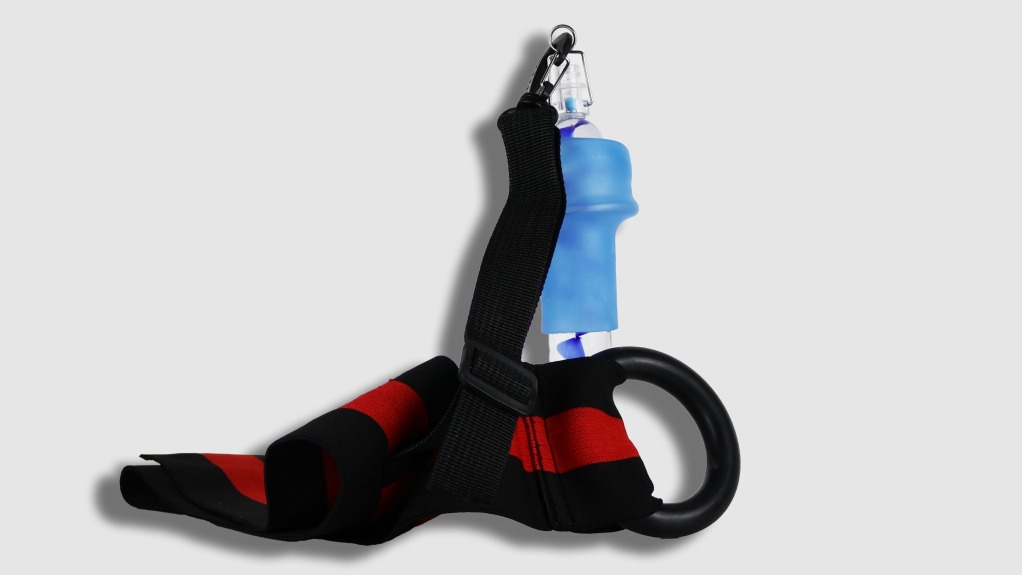
All-day stretchers (ADS) are belt-based fabric stretchers that usually direct the penis toward the hip, thigh, knee, ankle, or foot. Most apply relatively low force. Their main advantages are discretion and the ability to maintain an elongated position between more focused training sessions.
| Feature | Low Tension | High Tension |
| Primary role in the source | Shape training and retention | Tissue fatigue and stronger remodeling stimulus |
| Typical duration | Longer wear periods | Short, focused sessions |
| Force | Lower | Higher |
| Discretion | Varies; belts are often discreet | Usually bulky and used privately |
| Progression | Gradually add wear time | Gradually add work time; increase force cautiously |
| Main concern | Long-duration pressure and circulation restriction | Attachment injury, excessive fatigue, and overuse |
In short, it’s about combining the two forms of stimuli: short high-tension work for fatigue, followed by low-tension wear or all-day stretching to maintain alignment.
Attachment Safety
Noose-style extenders use a narrow rubber loop behind the glans. This can concentrate pressure in a small area, compress sensitive tissue, interfere with circulation, and irritate nerves. A temporary compression injury may take considerable time to resolve.
When possible, a wider padded strap, supportive cradle, or properly fitted vacuum attachment may distribute pressure more evenly. Padding does not make excessive force safe, and every attachment must still be monitored.
Remove the device immediately if the glans becomes cold, pale, blue, purple, dark, painful, or numb. Never “push through” altered sensation.
How the Routine Is Structured
- Preparation: Semi-erect bends, blood-flow-restriction (BFR) massage, and diamond jelqs are used to prepare tissue. Detailed technique is outside this article; do not attempt an unfamiliar exercise based only on its name.
- Interval length work: Repeated short bouts apply and release tension. The theory is that repeated loading creates more opportunities for fatigue than one uninterrupted pull.
- Expansion work: Air pumping, water pumping, or modified jelqs follow length work. The aim is to train blood-holding tissues in the elongated state.
- Retention: Brief pulse stretches or low-tension wear repeatedly return the tissue to an elongated position during the day.
How progression is organized
The shorter intervals stay constant. High-tension progression occurs mainly by adding five-minute sets every three to four weeks. Low-tension progression occurs mainly by slowly adding total wear time.
| Training Phase | Long High-Tension Sets | Total Long-Set Time |
| Month 1 | 2 sets × 5 minutes | 10 minutes |
| Month 2 | 3 sets × 5 minutes | 15 minutes |
| Month 3 | 4 sets × 5 minutes | 20 minutes |
Sample High-Tension Routine
This example pairs a high-tension extender with an air pump. It reflects the source material and is not a medically validated prescription.
| Stage | Exercise | Starting Volume |
| Preparation | Semi-erect bends | 3 sets × 60 seconds |
| Preparation | BFR massage | 3 minutes |
| Preparation | Diamond jelqs | 3 sets × 60 seconds |
| Short intervals | High-tension extender | 10 sets × 60 seconds; about 10 seconds to detach and reattach |
| Long intervals | High-tension extender | Begin with 2 sets × 5 minutes; add one set every 3–4 weeks |
| Expansion A | Interval pumping | 5 sets × 2 minutes |
| Expansion B | Traditional pumping | 1 continuous 10-minute set |
| Retention | Pulse/static stretches | Target 10 sets × 10 seconds throughout the day |
The long-term target for tension is approximately 5 to 8 pounds, beginning around 2.5 pounds during the first week and waiting roughly two to three weeks before reaching 5 pounds. This gradual start is intended to reveal attachment problems, (potential) blisters, or unusual tissue reactions before more force is added.
| Safety clarification: A number printed on a device does not prove that the force is safe for a particular person. Do not increase force while symptoms are present and never interpret numbness as successful adaptation. There are some extenders that can get up to 40lbs of force, but that does not mean we need 40lbs of force to make noticeable progress. Most won’t ever need to use that much. |
Sample Low-Tension Routine
Because low tension is not expected to create as much fatigue on its own, this routine begins with preparation and manual stretching. The extender then provides longer-duration shape training.
| Stage | Exercise | Starting Volume |
| Preparation | Semi-erect bends, BFR massage, and diamond jelqs | Use the preparation sequence above |
| Manual intervals | Manual stretches | 20 sets × 30 seconds |
| Extender wear | Low-tension extender | Begin with 4 sets × 30 minutes; release tension every 10 minutes |
| Expansion A | Interval pumping | 5 sets × 2 minutes |
| Expansion B | Traditional pumping | 1 continuous 10-minute set |
| No-pump option | Modified jelqs | 5 sets × 60 seconds |
| Separate retention | Usually unnecessary | The extender serves the retention role during wear |
We recommend adding 30 minutes of total wear every three to four weeks, gradually working toward a maximum of six hours. During breaks, fully release tension. If a strap or attachment is interfering with circulation, remove it rather than merely loosening the rods.
Progression, Recovery, and Stop Signs
High-tension work, including preparation, four to six days per week, with lighter pumping and pulse stretches on other days. Beginners should treat recovery, not a calendar quota, as the deciding factor. Pay attention to your Erection Quality (EQ)
Change only one major variable at a time: force, duration, frequency, or attachment pressure. Increasing all of them together makes it difficult to identify the cause of an adverse reaction.
Stop immediately if you notice:
- Sharp, burning, or increasing pain
- Numbness, tingling, or reduced glans sensation
- A cold glans or persistent pale, blue, purple, or dark color
- Blisters, broken skin, bleeding, or significant bruising
- Swelling that does not settle after the device is removed
- A new bend, lump, indentation, or decline in erection quality
Persistent or severe symptoms require medical assessment. Sudden severe pain, major swelling, a popping sensation, rapid bruising, or loss of erection after an injury warrants urgent medical care.
Key Takeaways
- Extenders are presented as tools for collagen remodeling and tissue positioning and not rapid cell multiplication.
- Low tension is used mainly for shape training, retention, and longer wear.
- High tension provides a stronger fatigue stimulus during short sessions.
- All-day fabric stretchers are discreet but generally produce less force.
- Noose attachments can concentrate pressure and increase the risk of nerve or circulation problems.
- Progress by increasing work gradually rather than making large jumps in force.