

A practical introduction to the IC and BS muscles, pelvic-floor tension, and simple self-massage
| Important: This article is educational and is not a substitute for medical evaluation. Persistent pain, numbness, urinary problems, or erectile dysfunction should be discussed with a qualified clinician or pelvic-floor physical therapist. |
Introduction
The pelvic floor, the perineum, the taint, the grundle, the undercarriage. Whatever you call it, this area is often overlooked in penis enlargement training.
That is a mistake. Pelvic-floor function can affect erection quality, penile relaxation, urination, and how well the penis fills with blood. This article explains the basic anatomy, why the muscles can become chronically tight, and how gentle massage may help restore normal function.
What Is the Pelvic Floor?
The pelvic floor is a group of muscles located at the bottom of the pelvis. These muscles help control urination, ejaculation, bowel function, and aspects of erection quality.
For erection quality, two muscles matter most:
The Ischiocavernosus Muscle
The ischiocavernosus muscle, or IC muscle, wraps around the roots of the erectile bodies. When it contracts, it helps compress those roots, trap blood, and increase pressure inside the shaft.
If the IC muscle cannot contract effectively because it is weak, guarded, or chronically tight, the shaft may not become as rigid as it otherwise could.
The Bulbospongiosus Muscle
The bulbospongiosus muscle, or BS muscle, helps inflate the glans and corpus spongiosum. It also contributes to ejaculation and the final stage of urination.
If the BS muscle is not functioning well, the glans may not inflate fully, ejaculation may feel weaker, or the area may remain tense when it should relax.
How the Pelvic Floor Supports an Erection
An erection does not begin with the pelvic-floor muscles. The first step is smooth-muscle relaxation inside the penis and the arteries that supply it. This allows blood to enter the erectile tissue.
Once that vascular erection begins, reflexive and voluntary pelvic-floor contractions can reinforce it and increase rigidity.
This means erection quality depends on several systems working together:
- Smooth-muscle relaxation allows blood to enter the penis.
- The autonomic nervous system initiates and regulates arousal.
- The IC and BS muscles reinforce pressure and rigidity.
- Cardiovascular health influences blood flow.
- Posture and nerve function may affect muscle performance.
Why Pelvic-Floor Problems Can Be Difficult to Identify
Erections are surprisingly complex. The pelvic-floor muscles, autonomic nervous system, cardiovascular system, posture, nerve health, and psychological state can all affect the final result.
Posture and skeletal alignment may also change tension around the pelvic floor or place pressure on the perineal and pudendal nerves. This can interfere with both muscle contraction and nervous-system signaling.
Because so many systems overlap, erectile dysfunction can be difficult to trace back to one clear cause. For a practical starting point, pelvic-floor function offers one of the clearest cause-and-effect relationships to examine.
The Main Problem Is Often Chronic Tightness
The IC and BS muscles are skeletal muscles. They contract, lengthen, tense, and fatigue like other muscles in the body. However, they are also closely tied to arousal and reflexive nervous-system activity, so most people have limited direct control over them.
These muscles also engage during nocturnal erections, so simple disuse is not usually the main issue. A more common problem is guarding, where the muscles remain chronically tight.
Stress can push the nervous system toward a sympathetic, fight-or-flight state. This increases general muscle tension, and a disproportionate amount of that tension can collect around the genitals and pelvic floor.
Over time, the muscles may begin to prefer this shortened position. The tight position becomes their normal resting state. If this continues for months or years, it may take consistent work to teach the muscles how to relax again.
This is not unique to the pelvic floor. Physiotherapy and sports rehabilitation use the same basic principle when treating chronically guarded muscles elsewhere in the body. This one just happens to be in a more awkward location.
Signs That Your Pelvic Floor May Be Too Tight
A tight pelvic floor may contribute to:
- Reduced erection rigidity
- A glans that does not inflate fully
- Poor flaccid hang or constant retraction
- Difficulty relaxing the penis
- Urinary hesitation or a feeling of incomplete emptying
- Pelvic or perineal tension
- A tendency to clench during stress or arousal
How to Check the IC and BS Muscles
The simplest practical test is gentle perineal massage.
The IC muscles sit along the sides of the base of the penis and extend underneath the pubic bone toward the inner pelvis. Their exact position can vary, and they may be felt through the scrotal area.
The BS muscle is more prominent and runs along the center of the perineum beneath the penis. These muscles can sit deeper than expected, so identifying them may feel awkward at first.
It may be easier to feel the muscles while erect, but the massage itself should remain gentle.
How to Perform Gentle Pelvic-Floor Massage
Use two fingers and apply light pressure along the muscles of the perineum.
Use enough pressure to feel the tissue, but do not try to dig into the muscle or force it to release.
Spend about two to three minutes on each side. As the tissue relaxes, you may notice a warm or flushing sensation in the perineum. This may reflect improved blood flow as the muscle releases tension.
Pelvic-floor massage can generally be performed once or twice per day. Because the goal is relaxation rather than fatigue, a higher frequency may be more useful than aggressive pressure.
What Changes Might You Notice?
After massage, some people may notice:
- A looser flaccid hang
- Better penile relaxation
- Easier urination
- Improved erection quality
- Fuller glans inflation
- More complete shaft expansion
How to Interpret the Response
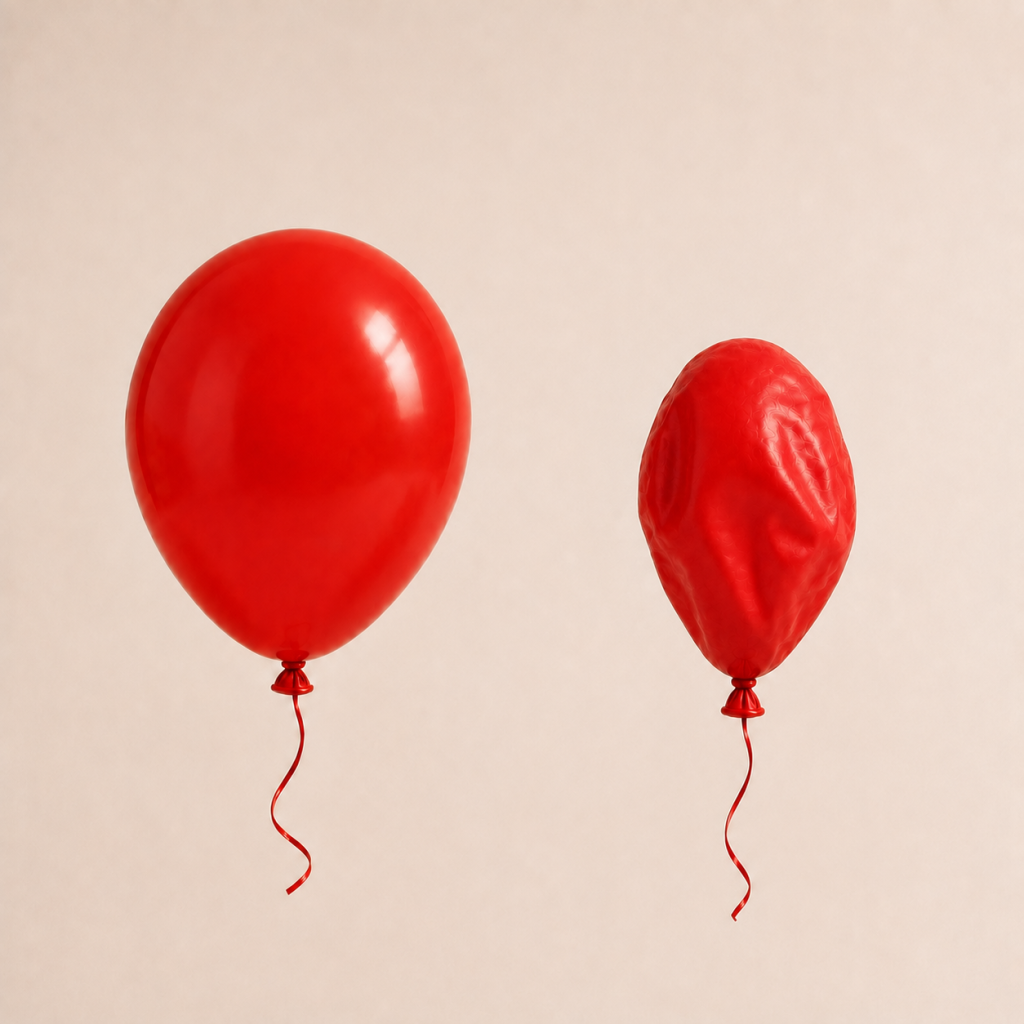
If the glans inflates more fully after massage, the BS muscle may have been limiting expansion.
If the shaft fills more completely or feels more rigid, the IC muscle may have been limiting pressure and blood trapping.
Most people will probably have some tension in both areas, with one muscle group creating a stronger limitation than the other.
These changes are not a perfect diagnostic test, but they can provide useful clues about whether pelvic-floor tightness is affecting erection quality.
Massage Helps the Symptoms, Not Necessarily the Root Cause
Pelvic-floor massage may reduce tension and improve short-term function, but it does not automatically fix the reason the muscles became tight.
Possible root causes include chronic stress, poor breathing patterns, posture, habitual clenching, aggressive training, pain, nerve irritation, and other nervous-system factors.
Those causes need to be addressed separately. Massage is best viewed as a way to reduce guarding, improve awareness, and teach the pelvic floor a more relaxed resting position.
How Long Does It Take?
Pelvic-floor relaxation should create a cumulative effect over time. The more consistently the muscles practice relaxing, the easier that resting position may become.
It probably took months or years for the pelvic floor to become chronically tight. It may take several weeks or months of consistent work to make a meaningful change.
The goal is not to force the tissue into submission. The goal is to repeatedly show the nervous system that the area is safe enough to relax.
The Biggest Takeaway
The pelvic floor is not a minor detail in erection quality. The IC and BS muscles help reinforce rigidity, fill the glans and corpus spongiosum, support ejaculation, and control aspects of urination.
When these muscles remain chronically tight, they may not contract or relax effectively. Gentle massage can be a useful first step for identifying tension and improving function, but lasting progress usually requires addressing the habits and nervous-system patterns that created the tension in the first place.